A beautiful sample does not guarantee a consistent bulk order. Artificial trees combine molded leaves, fabric or plastic foliage, wire, trunk components, adhesives, paint, cement-filled pots, and packaging. A defect in any one of these parts can lead to poor reviews, returns, assembly complaints, or damage in transit. This artificial tree quality inspection checklist gives wholesale buyers a practical framework for evaluating samples, monitoring production, and approving finished goods before shipment.
The checklist is designed for importers, distributors, Amazon sellers, and home-decor retailers. It should be adapted to your product specification, destination-market rules, and agreed inspection standard. Product safety and legal compliance must always be confirmed for the specific market and intended use.
Why Artificial Tree Quality Control Needs a Written Standard
Terms such as “realistic,” “full,” “natural color,” and “strong trunk” are subjective. A supplier and buyer may interpret them differently unless the approved sample is supported by measurable specifications. Your purchase order should define the total height, canopy width, leaf count or branch count where relevant, pot dimensions, net weight, materials, color reference, assembly method, carton size, labeling, and acceptable tolerances.
Start by understanding what artificial trees are made of. Material choices affect appearance, odor, flexibility, UV performance, color consistency, and how the product recovers after compression. The approved sample, specification sheet, packaging standard, and signed defect list should all refer to the same version.
1. Set the Inspection Plan Before Production
Decide when inspection will happen and who has authority to approve corrective action. A practical plan may include raw-material confirmation, a pre-production sample, an initial production check, a during-production inspection, and a final random inspection. High-risk or first-time orders generally need more monitoring than repeat orders with stable performance.
For final random inspection, many buyers use an acceptance-sampling plan rather than checking every unit. ISO 2859-1:2026 defines AQL-indexed sampling schemes for lot-by-lot inspection. The standard determines sample sizes and acceptance or rejection thresholds from the lot size, inspection level, and selected Acceptance Quality Limit. Buyers should use the current standard or a qualified inspection provider rather than copying a sample-size table from an unverified website.
A common commercial starting point is to classify defects as critical, major, or minor. For example, a buyer may specify zero tolerance for critical safety defects and use an agreed AQL for major and minor workmanship defects. These values are commercial decisions, not universal rules. They must reflect product risk, sales channel, price level, and customer expectations.
2. Confirm Product Identity and Quantity
- Match the purchase order, SKU, product name, size, color, and barcode.
- Verify finished quantity, packed quantity, and any incomplete units.
- Confirm the inspected goods are production units, not retained samples.
- Check assortment ratios when cartons contain several sizes or styles.
- Record carton numbers and randomly select samples across the available lot.
Random selection matters. Samples taken only from the top of easily accessible cartons may not represent the full order. Finished cartons should be spread across the production lot and warehouse locations where practical.
3. Measure Height, Width, Weight, and Pot Dimensions
Artificial tree dimensions can change after branches are shaped, so the measurement method must be defined. State whether height is measured from the bottom of the nursery pot to the highest natural leaf tip, and whether canopy width is measured after standard shaping. Use the same method for sample approval, production inspection, and online listings.
- Total product height after shaping
- Maximum canopy width and depth
- Nursery pot top diameter, bottom diameter, and height
- Net product weight and gross packed weight
- Trunk diameter at agreed reference points
- Carton length, width, height, and packed quantity
Record actual measurements, not only “pass” or “fail.” Repeated results close to a tolerance limit can reveal process drift before the order becomes unacceptable.
4. Inspect the Overall Silhouette and Realism
Evaluate the tree from the front, back, sides, and above. Compare it with the approved sample under similar lighting. The canopy should have the intended density and balance without obvious empty zones, repeated branch patterns, or an unnatural flat side. Multi-trunk products should maintain the approved spacing and visual hierarchy.
- Correct species, leaf shape, and intended color palette
- Natural distribution of light, medium, and dark foliage tones
- No obvious color mismatch between production batches
- Correct branch angles and sufficient shaping range
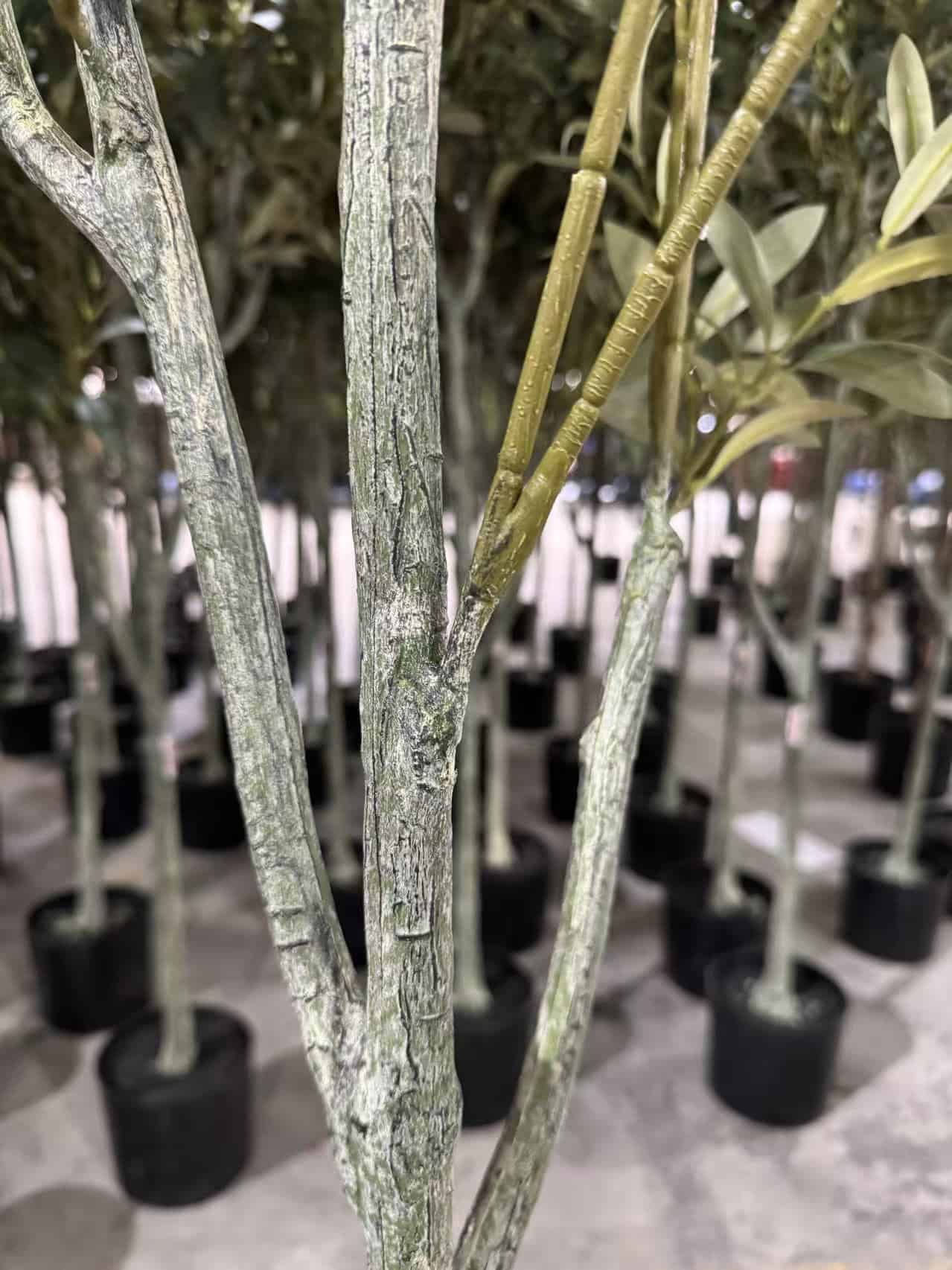
- No excessive exposed wire, glue, plastic joints, or mold flashing
- No missing branch clusters or visibly uneven foliage density
Allow trained inspectors enough time to shape the product according to the supplied instructions. A compressed tree should not be rejected solely because it has not been opened correctly, but excessive recovery time or permanent deformation should be recorded. Buyers can use our guide on how to shape artificial plants to define a repeatable presentation method.
5. Check Leaves, Stems, Branches, and Trunks
Inspect both visible finish and attachment strength. Gently handle leaves and branch tips in the way a customer would during unpacking and shaping. The goal is not to perform an undefined destructive test, but to identify loose components, weak adhesive points, sharp wire exposure, cracking, paint transfer, or inconsistent assembly.
- Leaves are securely attached and correctly oriented.
- Leaf edges are clean, without severe fraying, burrs, or tears.
- Printed veins and color gradients are aligned with the approved sample.
- Internal wire is covered and does not create accessible sharp points.
- Branches bend and hold position without abnormal cracking.
- Trunk coating, bark texture, or natural wood is clean and securely fixed.
- Paint and surface finish do not rub off under normal handling.
- Glue is controlled and not conspicuous on display surfaces.
6. Test Stability, Assembly, and K/D Connections
Place the tree on a level surface and confirm that it stands without unintended leaning or rocking. Check the nursery pot for cracks, deformation, sharp edges, loose filler, and contamination. The trunk must remain firmly located in the pot when the canopy is shaped within normal limits.
For knock-down products, assemble several units using only the instructions and components included in the carton. Confirm that sections connect in the correct order, orientation marks are understandable, locking features engage, and the assembled joint does not create a visible gap or unstable trunk. Shipping-efficient construction is valuable only when the customer experience remains simple. See how K/D artificial tree structures reduce shipping cost.
7. Review Odor, Cleanliness, and Workmanship
- No strong or unusual odor beyond the agreed limit
- No oil, dust, mold, insects, moisture, or foreign material
- No fingerprints, stains, overspray, or excessive adhesive residue
- No loose cement, sand, metal, or plastic fragments in the carton
- No damaged labels, mixed instruction versions, or incorrect accessories
If odor is a known concern, define a controlled evaluation method or an appropriate laboratory test instead of relying on an inspector’s personal impression alone. The same principle applies to restricted substances, UV claims, and fire-performance claims.
8. Verify Material and Compliance Documents
Inspection cannot prove every chemical or performance claim visually. Request current test reports that identify the product or material tested, test method, laboratory, date, and result. Confirm that the report covers the same materials, colors, and construction as the ordered goods. A generic report for unrelated plastic is not adequate evidence for a finished product claim.
For EU-bound goods, importers and suppliers should review their obligations under REACH. ECHA explains that Candidate List substances in articles can trigger notification and supply-chain communication duties under defined conditions. See the official ECHA guidance on Candidate List substances in articles. Requirements differ by destination and intended use, so buyers should obtain qualified compliance advice for their own products.
9. Inspect Retail Packaging and Shipping Cartons
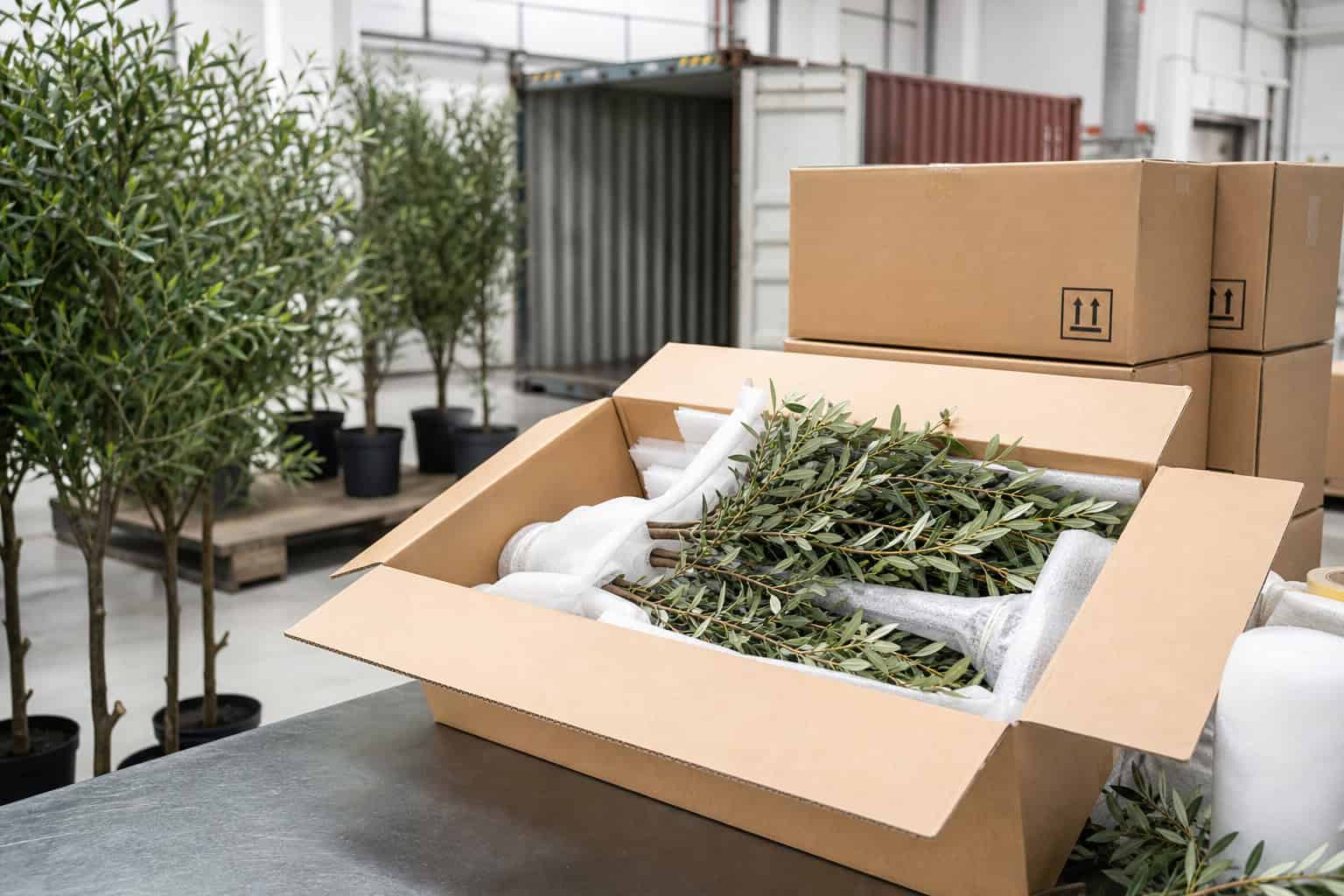
Packaging must protect leaves, branches, trunks, pots, and connection points without creating permanent deformation. Check carton strength, closure, inner protection, moisture control where required, barcode readability, shipping marks, and the accuracy of assembly and shaping instructions.
- Correct carton dimensions, board specification, and closure method
- Adequate protection around the pot, trunk joints, and branch tips
- No excessive compression that causes permanent canopy damage
- Correct labels, warnings, country-of-origin information, and barcodes
- Instructions and accessories present in every sampled carton
- Cartons remain safe to handle, stack, and open
Package testing should follow a procedure appropriate to the distribution route, product weight, and customer requirements. ISTA publishes packaged-product testing procedures, including free-fall drop methods. Buyers should specify the exact procedure and acceptance criteria rather than asking only for a vague “drop test.”
10. Define Defects Before the Inspector Arrives
| Defect class | Practical meaning | Artificial tree examples |
|---|---|---|
| Critical | A potential safety, legal, or serious compliance issue | Accessible sharp wire; prohibited material; dangerously unstable construction |
| Major | A defect likely to cause rejection, return, or loss of intended function | Wrong size or color; missing branch; cracked pot; loose trunk; incorrect barcode |
| Minor | A workmanship issue that does not materially affect use but falls below the agreed standard | Small hidden glue mark; slight leaf-print variation; minor non-display surface scuff |
Photographic defect examples are more reliable than text alone. Build a defect library during sampling and early production, then update it when new issues appear. If a result is disputed, refer back to the approved sample, specification, tolerance, and defect classification rather than making a subjective decision at the end of production.
Final Artificial Tree Inspection Checklist
- Purchase order, SKU, quantity, and assortment confirmed
- Random sample selected under the agreed inspection plan
- Height, canopy width, pot size, product weight, and carton size recorded
- Silhouette and foliage density compared with the approved sample
- Leaves, stems, branches, trunk, adhesive, and paint inspected
- Pot stability and K/D assembly tested
- Odor, cleanliness, accessories, and instructions checked
- Material and compliance documents reviewed separately
- Packaging, barcode, markings, and carton protection verified
- Defects counted by agreed critical, major, and minor classifications
- Photos and measurements included in the inspection report
- Shipment release, rework, or reinspection decision documented
Conclusion
Effective quality control begins before the order is produced. The strongest wholesale programs combine a clear specification, approved sample, current sampling plan, product-specific defect list, documented packaging requirements, and independent verification where appropriate. This reduces last-minute arguments and gives the factory measurable targets.
For a broader sourcing workflow, read our complete guide to wholesale artificial plants. Buyers comparing production partners can also review our artificial plant manufacturer selection insights.