Artificial plant sample approval is the point where a buyer turns a product idea, supplier quotation, and set of expectations into a controlled production reference. A sample may look attractive in a meeting or photograph, but approval without measurements, material details, packaging information, and documented tolerances leaves mass production open to interpretation.
This guide explains how wholesalers, importers, distributors, e-commerce sellers, and home-decor retailers can review artificial tree and plant samples, create a golden sample, control revisions, and connect sample approval to purchase orders, production inspections, packaging, and repeat orders.
What Is a Golden Sample?
A golden sample is a formally approved physical product used as a reference for production and inspection. It represents the agreed appearance and construction at a specific revision. Depending on the program, identical or clearly matched reference samples may be retained by the buyer, supplier, and inspection party.
The physical sample should not stand alone. It needs an approval record, specification sheet, photos, measurements, material references, packaging standard, and revision number. A sample can show color and workmanship, but it may not prove chemical compliance, internal construction, strength, long-term UV performance, or production consistency.
Why “Approved as Sample” Is Not Enough
Words such as realistic, full, natural, sturdy, and premium are subjective. Even two samples made by the same factory may be shaped differently. Without a defined method, one team may measure height from the pot base to the tallest upright tip while another measures a naturally curved canopy. The same problem affects width, foliage density, trunk color, and the amount of acceptable glue or exposed wire.
- The approved sample may contain hand-selected materials that are unavailable for mass production.
- Product measurements may change after shaping or branch compression.
- Color can look different under factory, showroom, and retail lighting.
- Natural wood trunks vary and need agreed limits rather than exact duplication.
- Packaging can deform foliage even when the unpacked sample initially looks correct.
- Unrecorded changes can create several conflicting “approved” versions.
A controlled approval process removes ambiguity before the order becomes expensive to correct.
1. Approve the Requirement Before the Sample
Begin with a product brief or request for quotation that defines the target market, retail channel, intended price position, product size, materials, appearance, packaging, quantities, and destination requirements. The supplier should identify assumptions and proposed deviations before making the sample.
- Product name, SKU, revision, and reference images.
- Finished height, canopy width, and measurement method.
- Leaf or branch count where it can be controlled reliably.
- Leaf, stem, trunk, wire, adhesive, coating, pot, and filler materials.
- Target colors, gradients, surface textures, and natural variation.
- Required stability, assembly, shaping, and recovery performance.
- Packaging method, carton limits, labels, barcodes, and instructions.
- Destination-specific testing, documentation, and labeling requirements.
Use our guide on artificial tree materials to understand how construction choices affect appearance, flexibility, weight, odor, and durability. If you are comparing multiple offers, first normalize them with the artificial plant supplier quote comparison guide.
2. Identify the Type of Sample
Not every sample serves the same purpose. Label its status clearly so a concept sample is not mistaken for a production-ready standard.
| Sample stage | Main purpose | What remains open |
|---|---|---|
| Reference sample | Communicate a general style, species, or price level | Materials, dimensions, tooling, and production method may differ |
| Development sample | Review design direction and construction | Color, density, parts, finish, and packaging may require changes |
| Sales or photography sample | Support internal selection or marketing preparation | It may use hand-finished or temporary components |
| Pre-production sample | Confirm production-intent materials, tools, assembly, and packaging | Only documented corrective items should remain |
| Golden sample | Serve as the approved physical production reference | No change without formal review and approval |
| Shipment sample | Represent finished mass-production output | Used for records, comparison, or post-shipment investigation |
The final approval should normally use production-intent materials and processes. If a temporary component remains, document it and require a follow-up approval before production or shipment.
3. Record Sample Identity and Revision
Attach a durable sample label or tag that cannot be separated accidentally from the product. The approval form and digital record should use the same identifiers.
- Buyer and supplier names.
- Product name, SKU, size, color, and variation.
- Sample number and revision code.
- Date made, date received, and date reviewed.
- Purpose: development, pre-production, golden, or shipment sample.
- Related quotation, purchase order, specification, artwork, and packaging revision.
- Names or roles of approvers and the approval decision.
- Storage location and replacement or expiry review date where relevant.
When several versions are evaluated, mark rejected and superseded samples clearly. Do not leave an older sample in the production area where it can be mistaken for the current reference.
4. Shape the Product Using a Standard Method
Artificial plants arrive compressed and their appearance depends on shaping. Approval should use a repeatable method and record the time required. State whether branches are spread to their natural limits, whether leaves are individually adjusted, and how the finished height and width are measured.
- Allow the sample to recover for the agreed period after unpacking.
- Use the supplied assembly and shaping instructions.
- Record assembly and shaping time separately.
- Photograph the unshaped and fully shaped product from consistent angles.
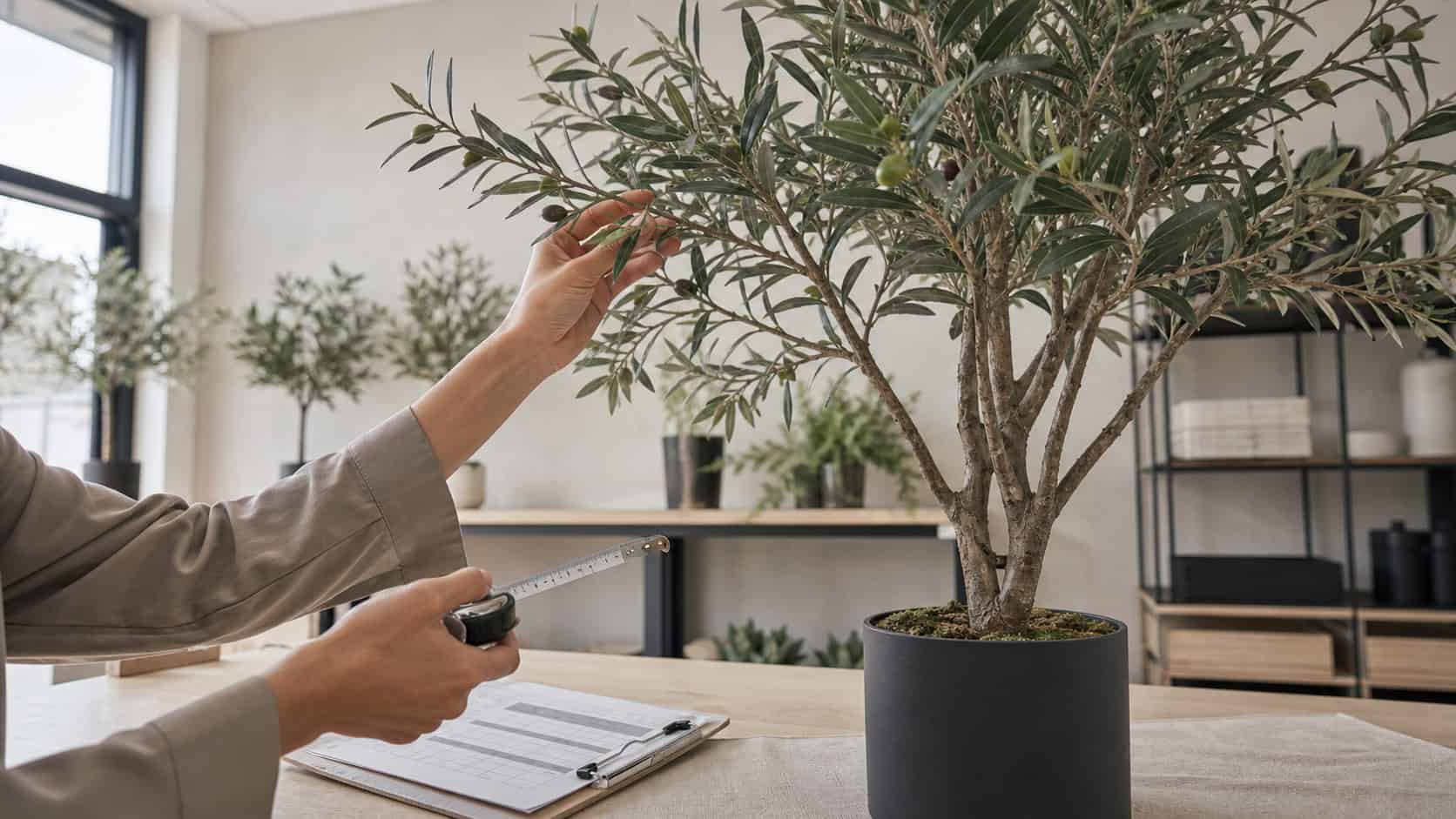
- Measure on a level surface using agreed reference points.
- Note any permanent creasing, broken stems, loose leaves, or exposed wire.
The process should be realistic for a retailer or end customer. Our guide on how to shape artificial plants can help establish a repeatable presentation method.
5. Measure the Product, Pot, and Carton
Record actual values rather than only pass or fail. Define the measuring tool, resolution, product condition, and tolerance. Measurements commonly include:
- Total height after standard shaping.
- Maximum canopy width and depth.
- Trunk diameter at specified reference points.
- Number of trunks, main branches, removable sections, or leaf clusters.
- Nursery pot top diameter, bottom diameter, and height.
- Net product weight and packed gross weight.
- External carton length, width, and height.
- Units per carton and included accessories.
Use tolerances that match the materials and process. A molded plastic part may support a tighter tolerance than the visual arrangement of wired foliage or a natural wood trunk. The supplier and buyer should agree on what is controlled statistically and what is assessed visually within defined limits.
6. Approve Appearance With Controlled References
Evaluate the sample in consistent lighting and against agreed references. Photographs are useful records but should not replace the physical sample for subtle color, gloss, texture, and density judgments.
- Overall silhouette, balance, and distribution of foliage.
- Leaf shape, printed veins, color gradient, gloss, and edge quality.
- Species-specific details such as fruits, buds, variegation, or bark texture.
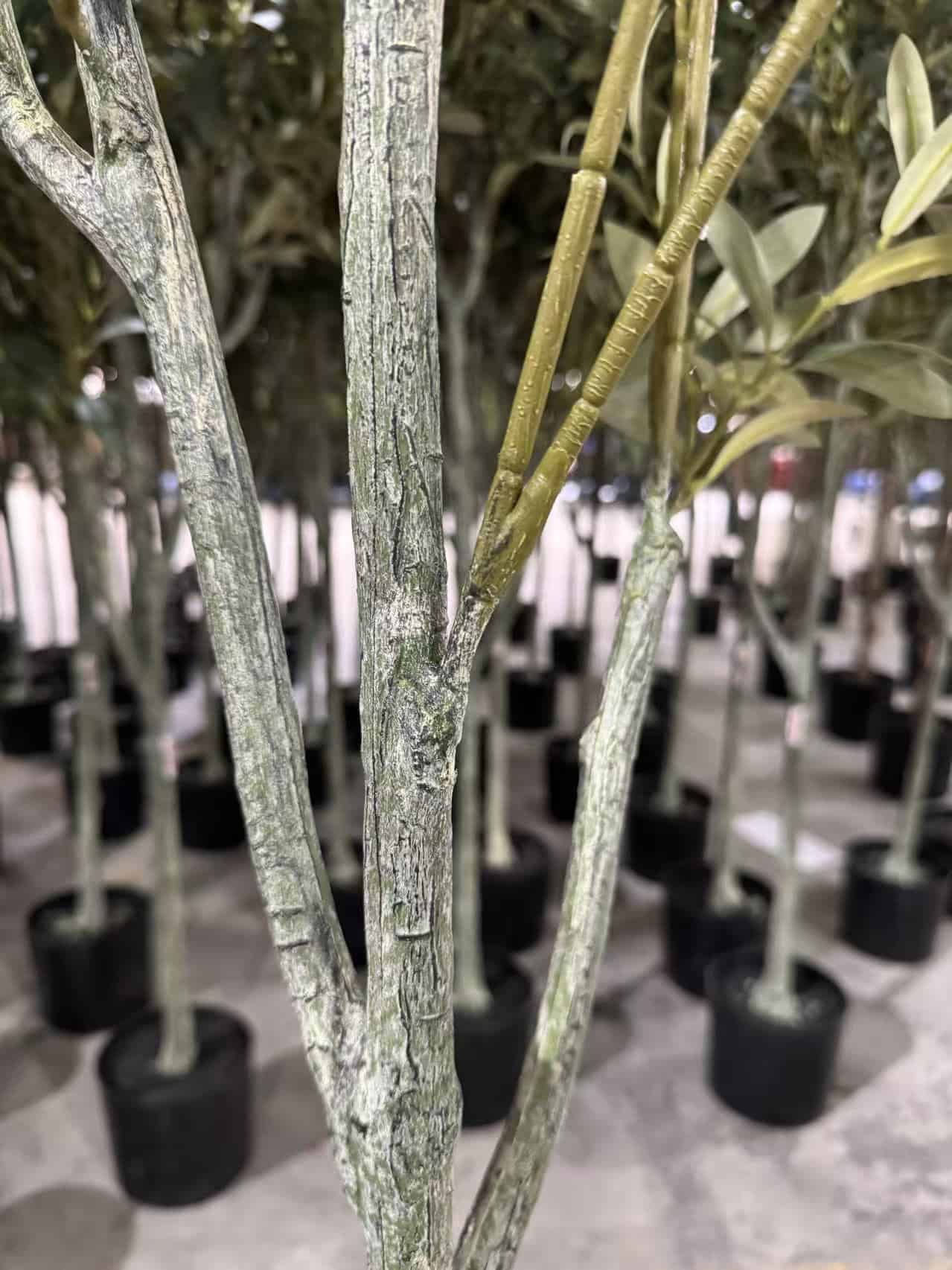
- Trunk color, finish, branching pattern, and natural variation limits.
- Visible wire, glue, mold lines, joints, ties, and attachment points.
- Pot color, surface finish, filler appearance, and trunk alignment.
- Front, back, side, top, and close-up appearance after shaping.
Where exact color matters, use a recognized physical color reference and define the viewing condition. Keep approved leaf, trunk, pot, and packaging swatches if the full sample may age or fade during storage.
7. Check Construction and Normal-Use Performance
Handle the product as a customer would during unpacking, assembly, shaping, and display. Tests should be defined in advance and should not become arbitrary destructive actions.
- Leaf and branch attachment under agreed handling.
- Branch flexibility and ability to hold the intended position.
- Coverage of internal wire and absence of accessible sharp points.
- Trunk connection, alignment, rotation, and visible gaps.
- Pot stability, rocking, leaning, cracks, and loose filler.
- Paint, flocking, print, or coating transfer during normal handling.
- Assembly completeness and clarity of instructions.
- Odor and cleanliness using an agreed assessment method.
Document the exact method and acceptance result. A statement such as “branch pull test passed” is incomplete without the force, duration, location, sample quantity, and failure definition.
8. Approve the Complete Packaged Sample
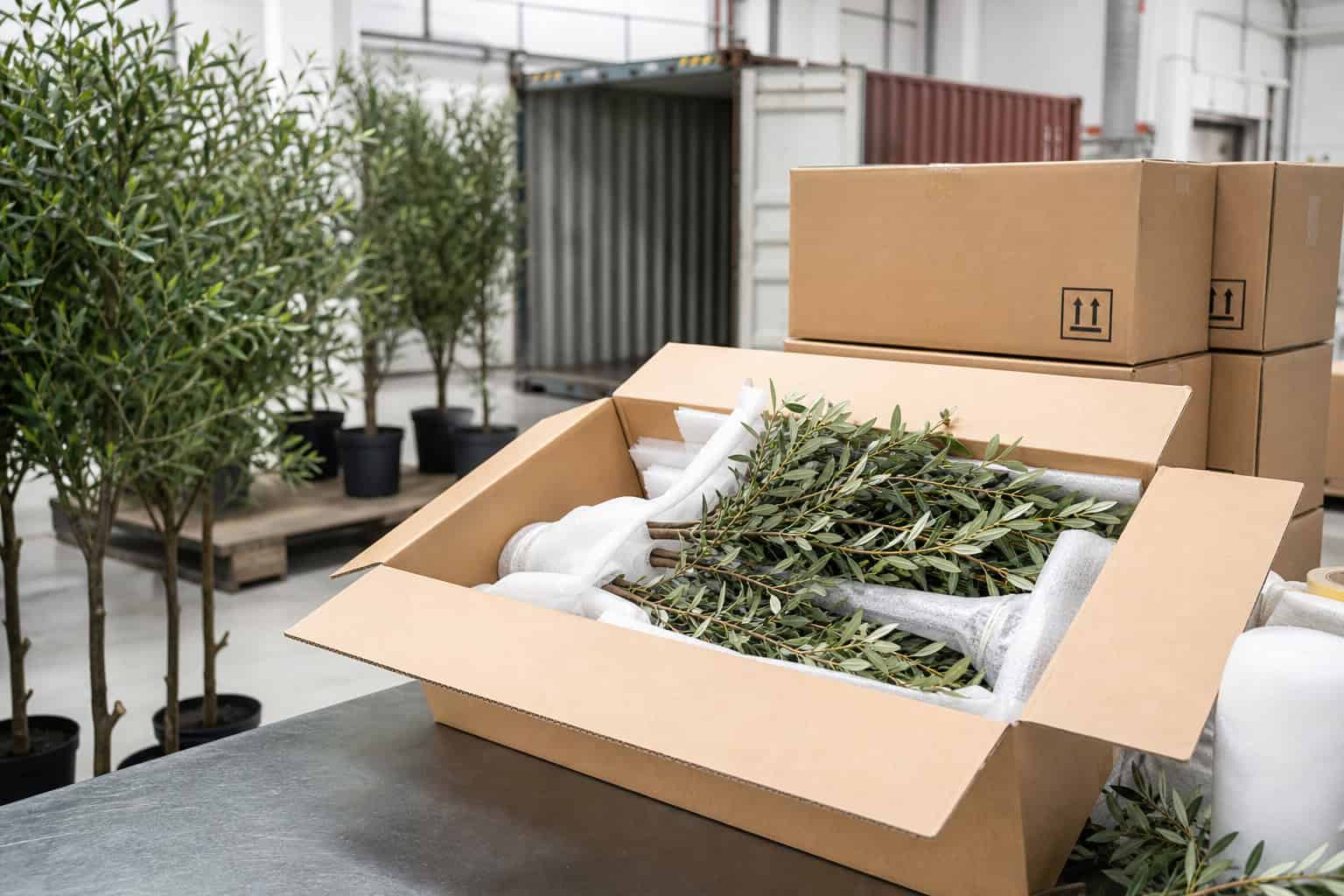
A beautiful unpacked sample does not prove that the production package will protect it. Review the product in its final packing configuration, including ties, sleeves, inserts, accessories, instructions, carton, labels, tape, and shipping marks.
- Confirm the packing sequence and branch-folding method.
- Verify protection around pots, connectors, leaf tips, and pressure points.
- Measure the finished closed carton and gross weight.
- Check barcode content, readability, orientation, and placement.
- Record unpacking, assembly, recovery, and shaping time.
- Inspect for leaf creasing, detached parts, cracked pots, and carton bulging.
- Link any package testing report to the same product and packaging revision.
See the artificial plant packaging guide for carton performance, compression, K/D design, moisture control, container loading, and packaged-product testing.
9. Separate Visual Approval From Compliance Evidence
A golden sample cannot prove every legal, chemical, or performance requirement. Request documentation that identifies the product or materials tested, the method, laboratory, date, and result. Confirm that reports cover the same materials, colors, coatings, and construction as the approved sample.
- Destination-market chemical and restricted-substance requirements.
- Labeling, country-of-origin, recycling, and consumer information.
- UV or weathering claims for products sold with those claims.
- Fire-performance claims where required for the intended market or channel.
- Packaging and solid-wood material requirements.
- Buyer-specific retailer or marketplace documentation.
Product and legal requirements vary by destination and intended use. Buyers should obtain qualified compliance advice for their own products and sales channels.
10. Define Defects and Tolerances Before Approval
Create an illustrated defect list using the sample and production risks. Classify defects by their potential impact rather than by how easy they are to photograph.
| Defect class | Practical meaning | Artificial plant examples |
|---|---|---|
| Critical | Potential safety, legal, or serious compliance issue | Accessible sharp wire, prohibited material, dangerously unstable construction |
| Major | Likely to cause rejection, return, or loss of intended function | Wrong size or color, missing branch, cracked pot, loose trunk, incorrect barcode |
| Minor | Workmanship below the agreed standard without material loss of use | Small hidden glue mark, slight print variation, minor non-display scuff |
For lot inspection, buyers may use an agreed acceptance-sampling plan. ISO 2859-1:2026 defines AQL-indexed sampling schemes for inspection by attributes. The chosen inspection level, AQL, defect classification, and acceptance criteria are commercial and risk decisions—not universal artificial-plant values.
11. Issue a Clear Approval Decision
Use one of three outcomes: approved, approved with explicitly closed conditions, or rejected for revision. Avoid vague comments such as “almost okay” or “improve during production.” Every open item should have an owner, due date, evidence requirement, and approval route.
- Approved: the identified sample and linked documents are authorized for production.
- Conditionally approved: only minor, measurable items remain and production authority is explicitly stated.
- Rejected: the sample is not authorized; the next revision and required changes are documented.
Approval should be signed or recorded by authorized people from the relevant buyer and supplier teams. If packaging, safety, or compliance approval is handled separately, show those statuses on the same record.
12. Control Changes After Golden Sample Approval
No material, color, component, tooling, assembly, supplier, or packaging change should be introduced silently after approval. The change request should explain the reason, affected SKUs and orders, risk, proposed verification, and effective date.
- Assign a new revision number.
- Mark or remove the superseded reference.
- Reapprove affected physical samples, specifications, artwork, or packaging.
- Repeat relevant testing when construction or performance may change.
- Notify inspection teams before the next production check.
- Define whether existing materials may be used and how they will be identified.
This change-control discipline is especially important for repeat orders, when both parties may assume the old standard is understood.
13. Store and Maintain Reference Samples
Protect reference samples from sunlight, heat, dust, moisture, crushing, and unauthorized handling. Store them in a location accessible to quality and production teams but controlled against accidental use or disposal.
- Use a sealed or controlled storage area where practical.
- Keep the sample label visible and attached.
- Store small swatches and parts in identified bags or boxes.
- Photograph the sample at approval and periodic review.
- Check for fading, dust, deformation, missing leaves, or damaged labels.
- Set a review trigger for long programs or material changes.
- Retain digital records after the physical sample is retired.
If the physical reference deteriorates, do not quietly replace it. Approve a new reference against the records and assign a controlled revision.
14. Connect the Golden Sample to Production Inspection
Inspectors should receive the correct sample revision, specification, packing standard, defect list, purchase order, and approved changes. Production goods should be selected randomly rather than presented only by the factory.
- Confirm SKU, revision, materials, dimensions, and quantity.
- Compare overall appearance under similar shaping and lighting conditions.
- Measure actual results and record deviations.
- Perform agreed normal-use, assembly, stability, and packaging checks.
- Photograph representative conforming products as well as defects.
- Record the sample revision used during inspection.
- Define the corrective-action and reinspection process before shipment.
Use the artificial tree quality inspection checklist to build the final production inspection plan.
Common Sample Approval Mistakes
- Approving from photos alone: color, texture, weight, stability, and workmanship remain uncertain.
- Using an undefined handmade sample: mass-production materials and processes may not match.
- Approving appearance but not packaging: shipping compression changes the delivered product.
- Keeping no revision record: teams work from different versions.
- Using subjective comments: terms such as fuller or more natural are not measurable.
- Ignoring natural variation: wood trunks require controlled limits, not exact cloning.
- Treating the sample as a compliance certificate: visual approval does not prove chemical or legal requirements.
- Allowing silent substitutions: materials change after approval without impact review.
- Failing to maintain the reference: faded or damaged samples create a moving standard.
Artificial Plant Sample Approval Checklist
- Sample type, SKU, revision, and purpose are identified.
- Production-intent materials and processes are confirmed.
- Product is assembled and shaped using a repeatable method.
- Dimensions, weight, pot, parts, and carton are measured.
- Appearance is reviewed under controlled conditions.
- Construction and normal-use performance are checked.
- Complete packaging, labels, instructions, and recovery are approved.
- Compliance evidence is reviewed separately.
- Defects, tolerances, and inspection method are documented.
- Approval decision, signatures, date, and open items are recorded.
- Golden samples and digital records are stored securely.
- Change control and reapproval rules are included in the order.
Frequently Asked Questions
How many golden samples should a buyer approve?
At minimum, the parties need reliable access to a controlled reference. Many programs retain matched samples with the buyer and supplier, and sometimes the inspection provider. The appropriate number depends on product complexity, locations, inspection method, cost, and the risk of sample damage or loss.
Can a photo replace an artificial plant golden sample?
Photos are useful for records and communication but rarely capture subtle color, gloss, texture, weight, flexibility, stability, and three-dimensional foliage distribution. Use photos alongside a specification and physical sample where those characteristics matter.
Should the carton be part of sample approval?
Yes. Approve the complete packed configuration because ties, compression, protection, carton dimensions, and transport exposure affect the condition customers receive. Link the final packaging and any test report to the same sample revision.
Does a golden sample guarantee every production unit?
No. It defines the agreed reference, but production still needs process control and inspection. Natural and manufacturing variation must be managed through specifications, tolerances, defect definitions, sampling, and corrective action.
Turn Sample Approval Into Production Control
A useful golden sample is more than a good-looking tree in a meeting room. It is a controlled reference linked to measurable specifications, packaging, compliance evidence, revision history, and inspection instructions. That connection helps buyers prevent misunderstandings, evaluate mass production consistently, and protect repeat-order quality.
For the full buying process, read The Complete Guide to Wholesale Artificial Plants. Buyers who need support with samples, specifications, packaging, or wholesale quotations can contact Sinleen.