The artificial plant market in 2026 is being shaped by a practical combination of design demand and buyer discipline. Consumers still want greenery without watering, light, or seasonal maintenance, but they are becoming more selective about realism, styling flexibility, packaging efficiency, and the credibility of sustainability claims. For wholesalers and retailers, the opportunity is no longer simply to carry more faux plants. It is to build a focused assortment that looks convincing online, arrives safely, and fits several interior styles and price points.
This forecast focuses on observable retail and design signals rather than repeating opaque market-size estimates. It draws on current home-decor trend reporting, e-commerce behavior, and regulatory developments that affect international buyers. The result is a practical guide to the artificial trees, materials, content, and supplier capabilities that matter most in 2026.
1. Evolved Biophilic Design Moves Beyond “More Green”
Nature-led interiors remain important in 2026, but the look is becoming more layered. The Spring Fair 2026 interiors outlook highlights natural materials, warm textures, matte finishes, and nature-inspired colors such as sage, terracotta, muted blue, ochre, forest green, and brown. This means artificial plants work best when they are presented as part of a complete material story rather than as isolated green decoration.
For buyers, this favors products with natural silhouettes, visible branch movement, varied leaf tones, and planters that coordinate with wood, rattan, stone, ceramic, and textured fabrics. Olive trees, ficus, black olive trees, palms, and airy branch forms can cover several looks when their proportions are correct and the foliage is not overly dense.
2. Realism Is Shifting From Leaf Color to Whole-Tree Construction
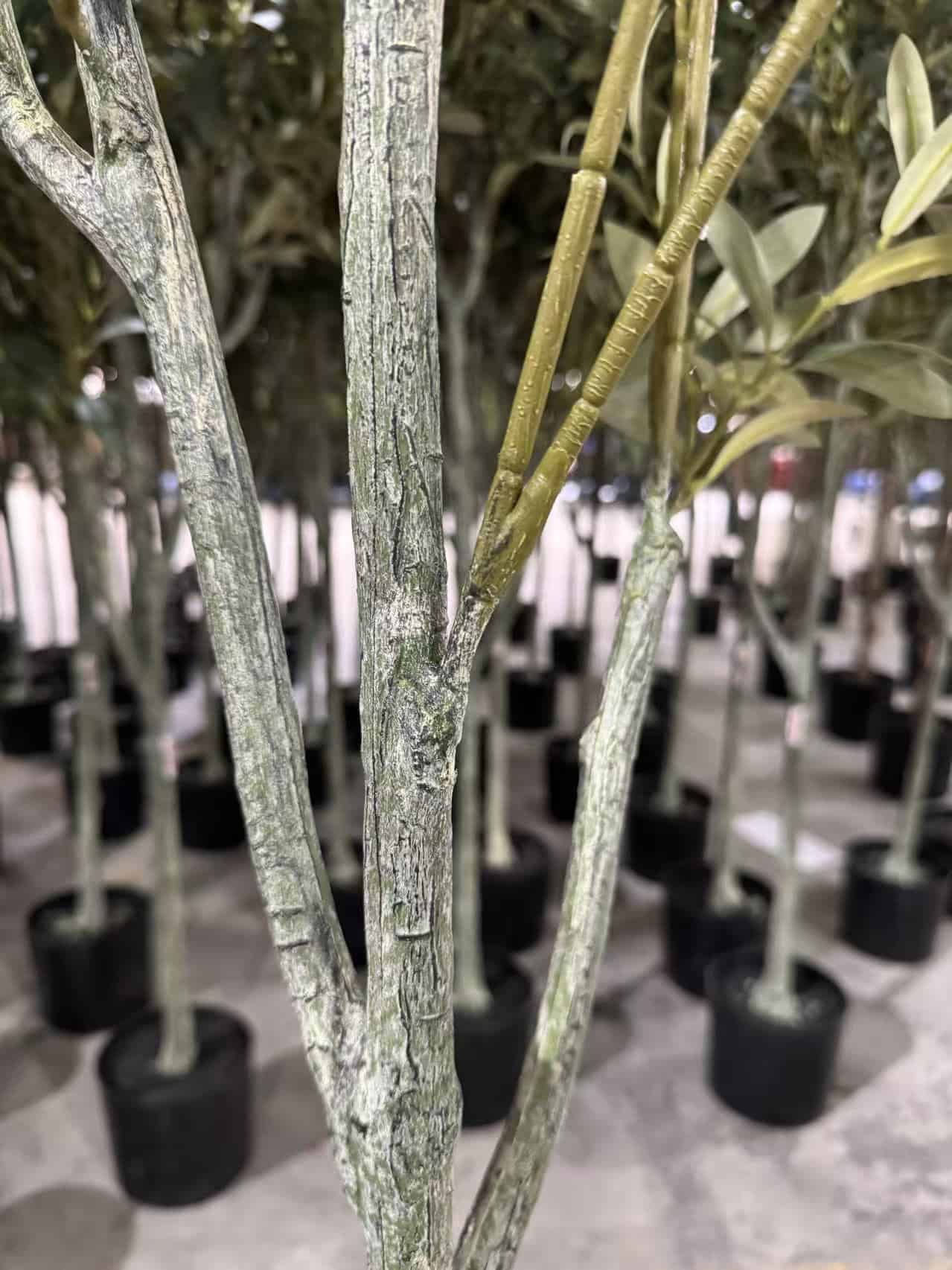
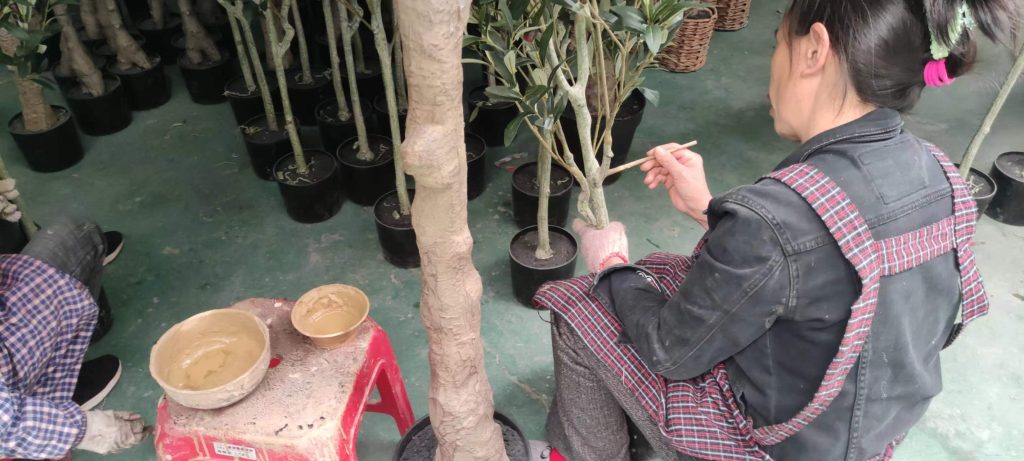
A convincing artificial tree is judged at multiple distances. Product-page images may sell the leaf detail, but the customer’s final judgment also includes trunk texture, branching angles, canopy balance, the transition between stem and leaf, and the stability of the nursery pot. In 2026, better products combine color variation with irregularity: not every leaf faces the same direction, branches do not repeat mechanically, and the crown can be shaped after unpacking.
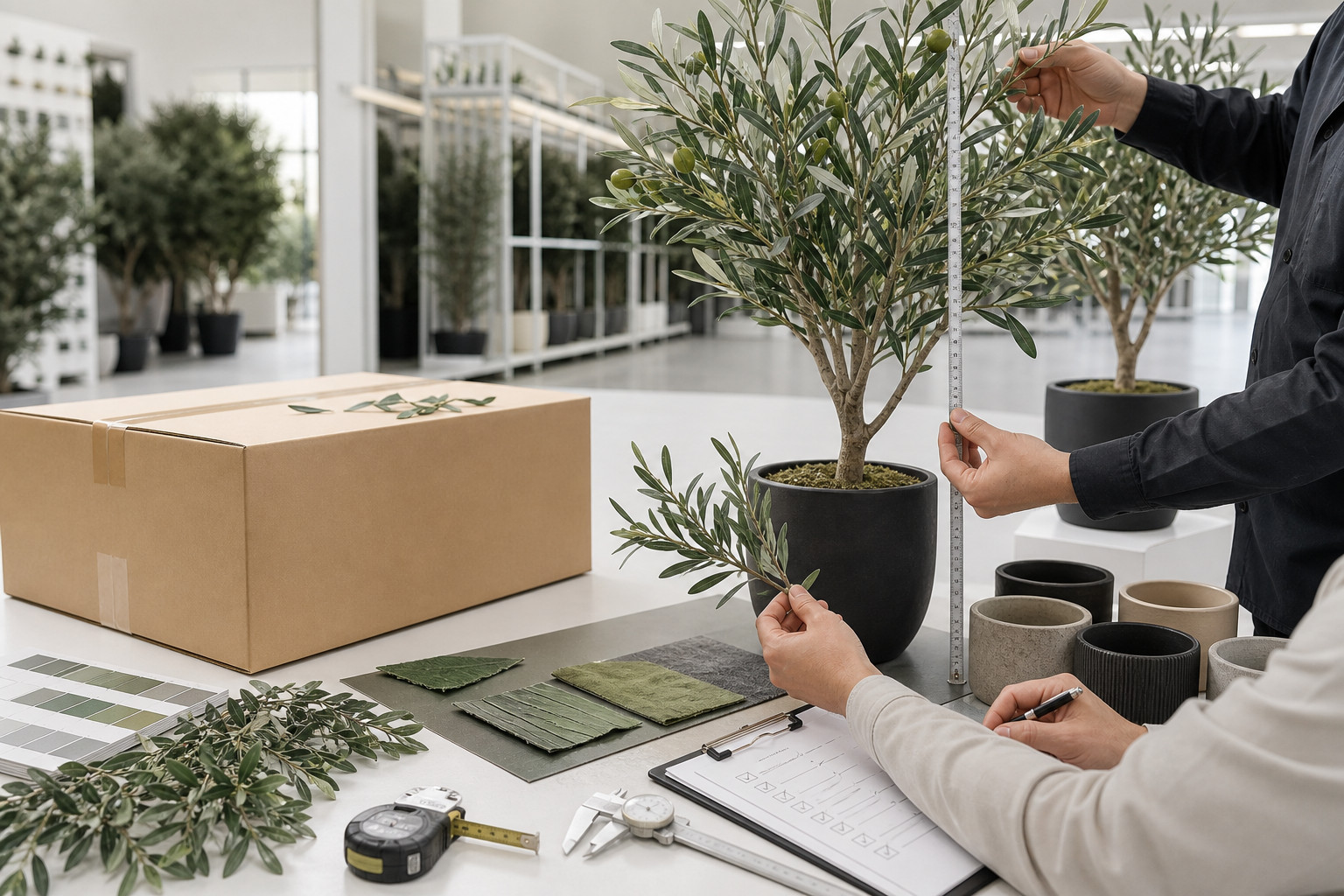
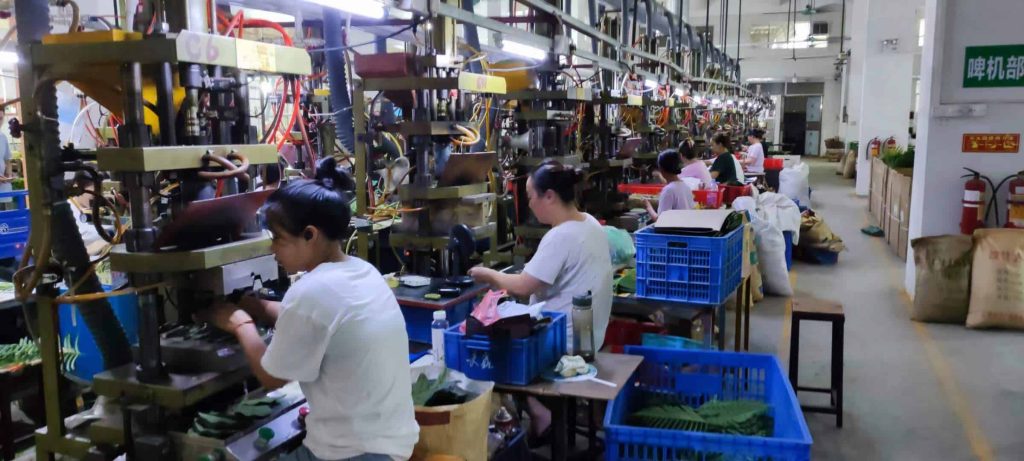
Real-touch coatings, multi-tone printing, molded bark, natural wood components, and internal wire structures can improve the result, but material names alone do not guarantee quality. Buyers should request close-up photos, unedited video, carton-opening footage, and a physical sample before approving bulk production. Our guide to artificial tree materials and construction explains how these components affect appearance, durability, and cost.
3. Olive-Inspired and Airy Tree Silhouettes Remain Core Assortment Styles
Artificial olive trees remain useful because their narrow leaves, open branching, and soft gray-green palette fit Mediterranean, organic-modern, farmhouse, and warm-minimal interiors. The broader trend, however, is not limited to one species. Buyers are also looking for airy black olive, ficus, eucalyptus, and sparse canopy styles that add height without visually blocking a room.
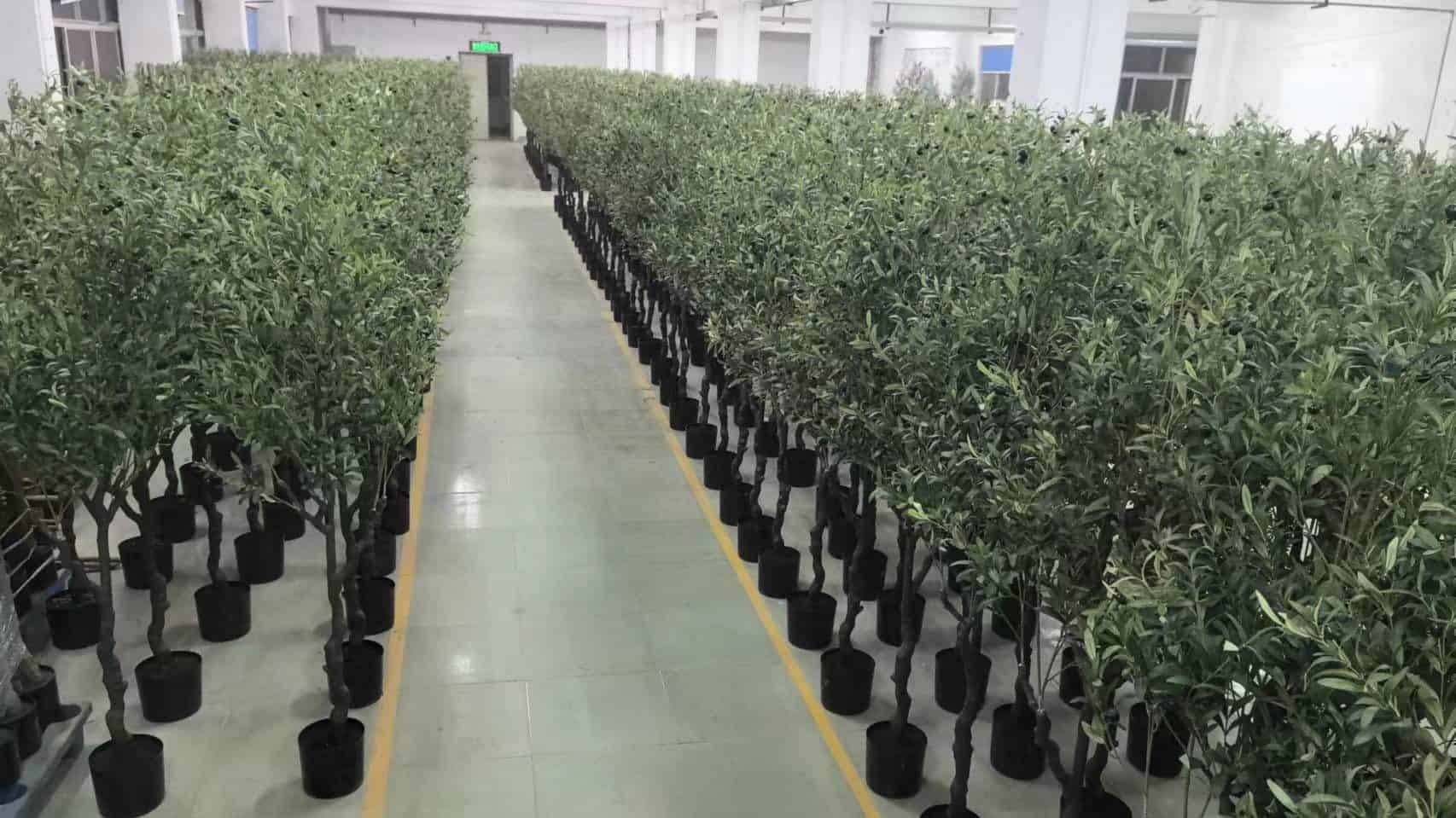
The strongest assortment is usually a coordinated family rather than a single SKU: two or three heights, consistent leaf and trunk quality, and compatible pot proportions. Retailers can then merchandise the same visual language for tabletops, corners, and larger statement placements. See our guides on whether faux olive trees are still in style and how to style an artificial olive tree.
4. Personal Expression Is Replacing One-Style-Fits-All Minimalism
The 2026 home category is more expressive than the beige-minimalist cycle that dominated many previous assortments. Pinterest Predicts 2026 identifies emerging decor directions that emphasize identity, optimism, and bolder combinations. Its Afrohemian signal, for example, combines layered pattern, craft, rattan, bamboo, and culturally specific references rather than a single neutral formula.
Artificial plant suppliers do not need to chase every micro-trend. A safer B2B response is to offer adaptable botanical forms and vary the styling around them: warmer or cooler planters, different basket textures, sparse or full canopies, and several trunk finishes. This gives retailers room to create distinctive collections without rebuilding the entire product platform every season.
5. E-Commerce Performance Depends on Product Clarity
Artificial plants are highly visual, but online conversion depends on reducing uncertainty. Buyers need accurate total height, canopy width, pot dimensions, product weight, branch-adjustment instructions, material information, and a realistic indication of how the tree looks immediately after unpacking versus after shaping. A clean white-background image is necessary, but it should be supported by close-ups, a scale reference, a short 360-degree video, and a carton-opening demonstration.
Social platforms increasingly connect inspiration directly to shopping. That shortens the distance between a trend image and a purchase, while also increasing the risk of returns when the delivered product does not match the content. Suppliers that can provide consistent photography, video, packaging measurements, and variation data make it easier for distributors to launch and maintain listings across Amazon, independent stores, and wholesale catalogs.
6. Shipping-Efficient Product Engineering Becomes a Market Advantage
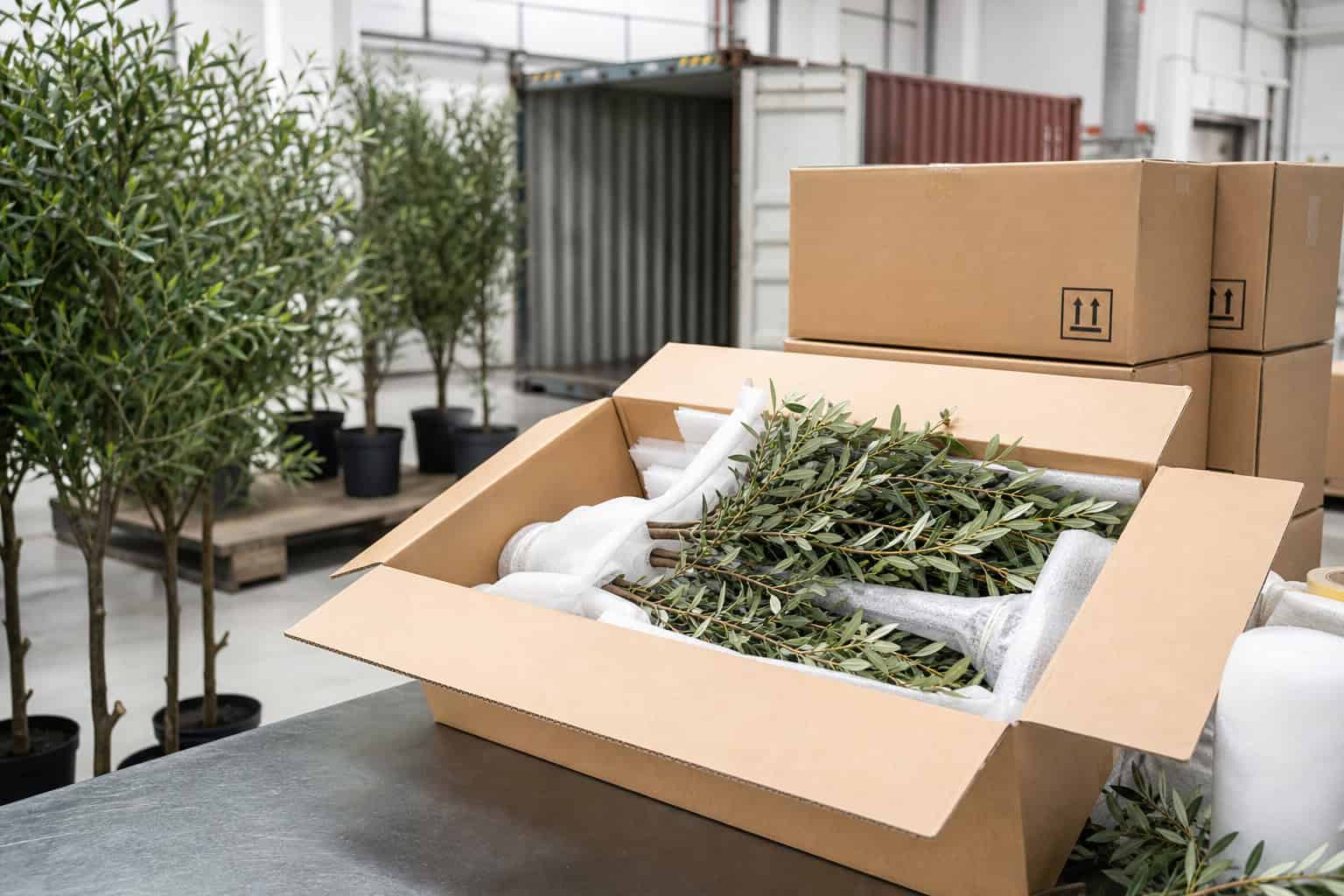
Freight and storage costs remain important even when rates are relatively stable. For tall artificial trees, carton cube can influence landed cost as much as the unit price. Knock-down trunks, detachable branches, foldable canopies, and nesting pots can improve container utilization, but only when assembly is intuitive and the finished tree remains stable.
Buyers should compare products by landed economics, not factory price alone. Ask for carton dimensions, gross and net weight, units per container, drop-test standards, assembly time, spare-part policy, and the expected recovery of foliage after compression. Learn more in our guide to how K/D structures can reduce artificial-tree shipping cost.
7. Sustainability Claims Must Become Specific and Verifiable
In 2026, vague labels such as “eco-friendly” are less useful to professional buyers than documented material and packaging facts. A supplier should be able to state which components contain recycled content, whether different materials can be separated, how packaging weight has been reduced, and what test or chain-of-custody evidence supports each claim. Durability also matters: a product that keeps its appearance through several selling seasons can reduce replacement and return waste.
Packaging compliance is becoming especially relevant for EU-bound orders. The European Commission states that the Packaging and Packaging Waste Regulation (EU 2025/40) generally applies from 12 August 2026 and covers packaging design, composition, and recyclability. Importers should review their specific obligations with qualified compliance advisers and start collecting packaging specifications from suppliers rather than waiting until goods are ready to ship.
8. Assortment Strategy: Fewer Hero Products, Better Variations
A large catalog can create choice, but it can also spread sampling, photography, inventory, and quality control too thinly. A more resilient 2026 approach is to develop hero product families. Each family should have a recognizable silhouette, two or three commercially useful sizes, a clear good-better-best price ladder, and reliable repeat-production standards.
- Choose species and shapes that solve distinct visual needs: narrow, airy, full, tropical, and tabletop.
- Use sample evaluation criteria that cover silhouette, color under different light, pot stability, shaping time, and carton recovery.
- Plan replacement parts and repeat-order color consistency before the first bulk order.
- Build listing assets during sampling so that packaging instructions, dimensions, and product claims match the approved sample.
- Track return reasons and customer questions; these often reveal the next product or content improvement more reliably than trend headlines.
9. What Wholesale Buyers Should Prioritize in 2026
The most promising products in 2026 combine visual relevance with operational simplicity. They are realistic enough for close-up e-commerce content, adaptable enough to work across several decor directions, engineered to ship efficiently, and supported by traceable specifications. Price remains important, but consistency and information quality increasingly determine whether a product can scale.
Before selecting a supplier, compare sample quality with the proposed production standard, confirm carton and container data, document acceptable tolerances, review packaging compliance for the destination market, and agree on the content assets required for launch. For a complete sourcing workflow, use our wholesale artificial plants buyer’s guide.
2026 Outlook
Artificial plants are not a single passing decor trend; they are a practical product category that changes with interior aesthetics, digital retail expectations, and supply-chain requirements. In 2026, the strongest growth opportunities are likely to come from better realism, adaptable nature-led silhouettes, expressive styling, transparent product information, lower shipping cube, and defensible sustainability claims.
For buyers, the winning question is no longer “Which artificial plant is trending?” It is “Which product family can remain visually relevant, perform online, arrive efficiently, and be reordered with consistent quality?” Suppliers that can answer all four parts will be better positioned for long-term wholesale relationships.